
by Beth Primrose:
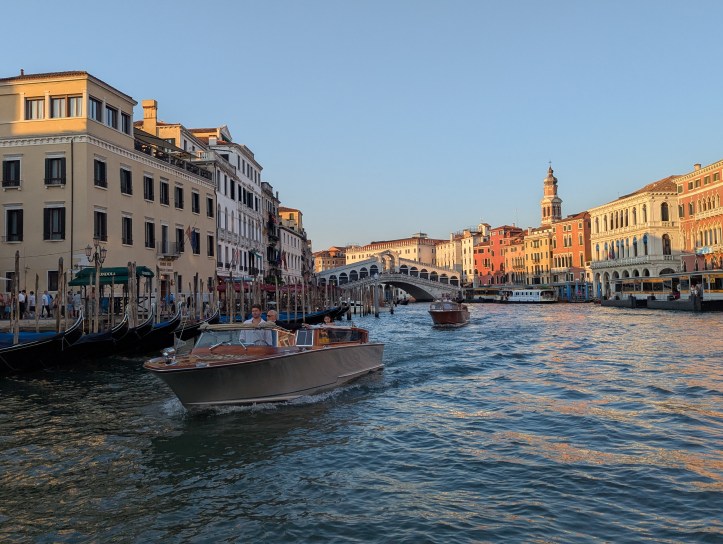
The Venice Biennale, often cited as the Olympics of the art world, is an event you cannot fully prepare for or appreciate until you are experiencing it! As well as the two main areas, hosting the International Pavillions, there are hordes of ‘collateral events’ and tens of other independent shows.
Since being here I’ve heard numerous approaches to ‘doing’ the Biennale from scoring off venues on maps, to strategic planning of specific shows and the full on madness of trying to see every one of the over one-hundered and thirty shows in just a long weekend.
Although I relate to this need to see everything I do wonder how much you can take in at this pace and how enjoyable it will be? I wonder if it just becomes a ticklist- surely so far from what “In Minor Keys” curator, Koyo Kouoh, intended?
I have the luxury of being here for several weeks and can take a more relaxed approach. Choosing a few venues to visit and becoming lost, stumbling across shows (of which I have no problem doing) and stopping for a coffee or a reprieve in the shade was a beautiful way to discover the work.
The serenity and airyness of the Welsh Pavilion, exploring identity and space through the Welsh language was such a gentle introduction to art exploration in the heat. Whilst the group show at the Republic of Zimbabwe, Second Nature, was a cornucopia of sculptural and 2D work looking at the theme of change and transformation, particularly in relation to technology. Discovering the vivid multi-media portraits of Franklyn DzingaiI and the haunting sculptural works of Gideon Gomo here was a highlight of my day. I also took in the collateral events from Ethiopia, New Zealand and the phenomenal Elegy by Gabrielle Goliath (you can read a full review of this exhibition on the SNACK mag website).
This slow and steady approach was relaxing- but not effective! Five in one day was not going to cut it- even when here for a longer stay.
So on my next day off I head out to the Giardini- one of the main areas of the Biennale- with comfy shoes and a determination to really ‘do’ the Biennale. Arriving at the idyllic, leafy site was a welcome start- shady and relaxing seemed like a good omen.
Each pavillion in this area has its own unique building (some dating as far back as 1895) which reflect the history, political status and culture of the country. The ostentatious British pavilion, for example, boasts colonial columns and sits slightly taller than most of the other buildings whilst the Finnish architecture, which could be mistaken for a lakeside cabin, is unassuming and earthy. Read from this what you will.
Entering the imposing Spanish pavilion- every inch covered in found postcards- I felt simultaneously overwhelmed, icky and awe-inspired by the time and expense that was evident in the creation of these monumental exhibitions. Each artist, and each country was trying to be seen and remembered in a sea of artwork. A sea that hosted so many works it felt at times like with the work or I were drowning.
Visiting the Central Pavilion didn’t ease the sense that there was a grotesque amount of money being pumped into this international event and the stories of clearing out the working classes from the island simmer uncomfortably as I take in the opulence of the space.
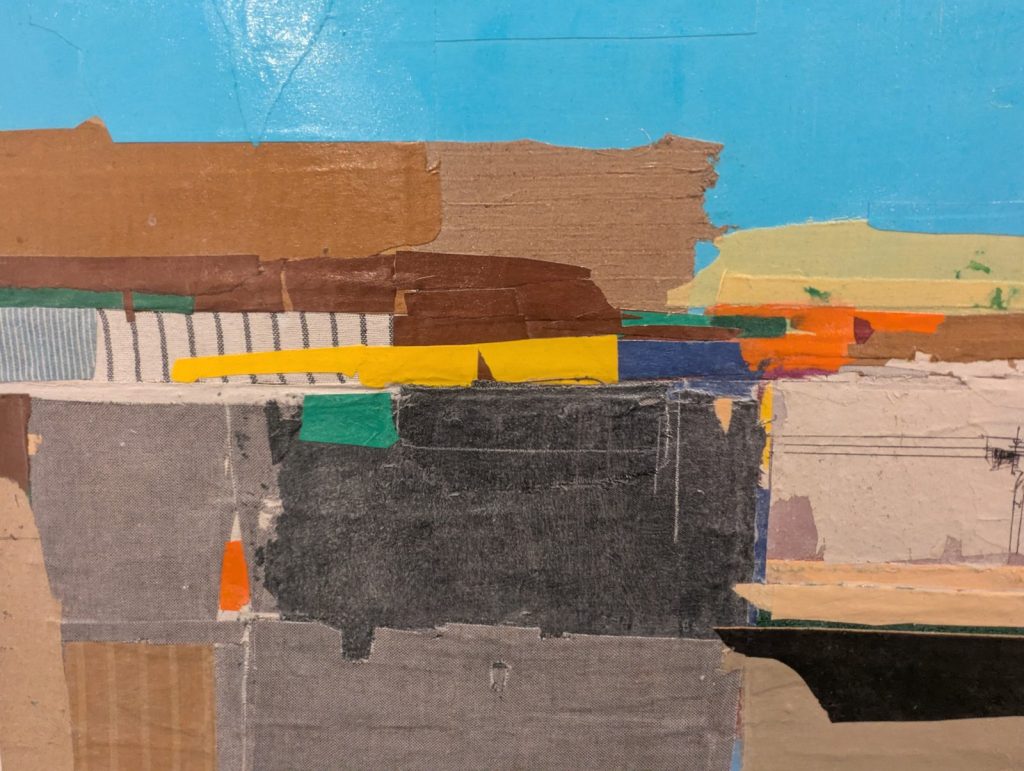
I try to tuck this discomfort away and focus on the work itself- to do justice to the experience and the artists who have created it. I earnestly read every text at first- even work I’m not particularly drawn to- but quickly realise that even with several days to explore this approach just isn’t going to work. So I refocus and hone in on the works that speak to me. The patchwork style landscapes by Mohammed Joha, an artist from Gaza City, capture the light and essence of time and place and are totally transportive. Beautifully intricate, meditative and organic hangings by Adebunmi Gbadebo explore slavery in the American South through materials extracted from the land.
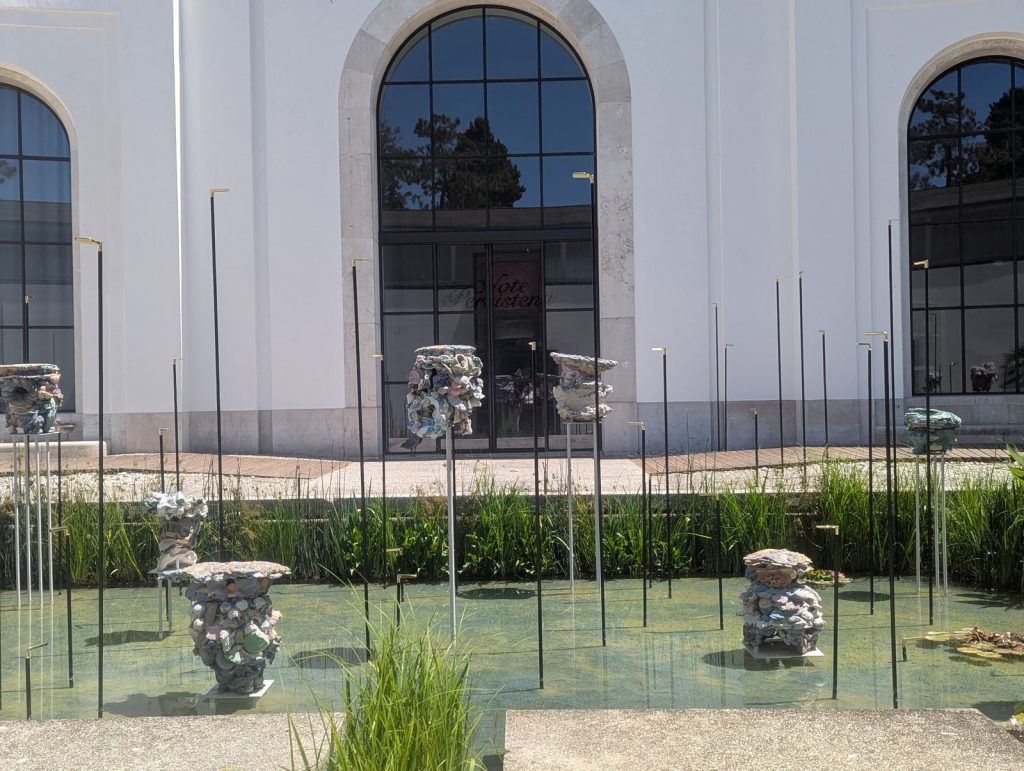
Hungary’s pavillion with ethereal and magically surreal wind drawings and a year long quest for the cosmic breath by Endre Koronczi entirely captured my heart and imagination. Whilst the intricate, verdigris and coral assemblages that appear as if they are made from frosted glass but are created from detritus, float above the water feature outside the Venice pavilion evoking a sense of grandeur and elegance and interrogating the climate crisis.
Further down the gardens the delicate and ethereal works in the French pavillion are a real salve for the mind and eyes with soft textiles in pale pinks and metallic coppers depicting the cycles of Saturn. Literally and figuratively layered work, Yto Barrada, explores time and destruction through reference to Greek mythology and the tyrant who ate his own son.
Familial relationships continued in the Japanese pavilion where audience members were invited to explore the exhibition whilst holding a weighted baby doll. Blanketed with the climbing tots in brightly coloured outfits and pastel milk bottles the whimsical aesthetic belied the touching interrogation of collective care and queer kinship.
Every year the Biennale has most talked about works and this year was no different. Making the headlines, and often hour long queues was the Austrian pavilion with Seaworld Venice by Florentina Holzinger. I have to say I was slightly sceptical of the piss-tank and naked performance but felt compelled to take a look and I was more than pleasantly surprised. Instead of the spectacle I had expected I was met with a reverent performance which demanded reflection and contemplation. At the site entrance the bell was tolled by the body of an upended female- the physical exertion and hush that descended on the crowd set the scene for something much more serious than I’d expected. On entering the pavilion it was clear that the bell was tolling for the climate and the dire impact humanity is having on it. Holzinger or one of her team were submerged in a tank of recycled urine, provided by the audience, provoking questions of the sustainability of our water system and how we might survive in the event the scorching heatwaves we have been experiencing continue to worsen.
The final piece was performed on a jetski. It’s cyclical journey symbolising the repeated mistakes of humanity and the inevitable choke of fumes and churning waters representing the tumultuous consequences of our stupidity. Mid performance the artist balanced in alluring positions atop the monstrosity- evoking page 3 style pictures of models on car bonnets -and highlighted the eco-feminist themes of the work where women and their bodies suffer under the same systems which extract from and destroy our planet. And this is one of the plus sides of the Biennale- you see things you might normally avoid and important themes and ideas, not always represented in more commercial, mainstream galleries are spotlighted.
Truly, there are so many fantastic works I could write about and many that have just got lost in the ether. I’ve not even mentioned the other main exhibition space, The Arsenale, which was also filled with a plethora of outstanding works. But is this perhaps part of the problem? And again about the amount of money and extravagance lavished on this one event? Is it just too much? And in times of such desperate need can we even justify it?
Text and images by Beth Primrose: Beth graduated from CAPetc… in June 2026. She is an artist, writer, educator and founder of CAPture Art Magazine, based in Edinburgh.
Further Writing, articles and interviews by Beth Primrose: https://fadmagazine.com/author/beth-cockerline/ – https://snackmag.co.uk/author/beth-primrose

